By the time winter starts settling in across Connecticut, most homeowners already know what’s coming next—higher heating bills, dry indoor air, and that constant battle with the thermostat.
It usually starts the same way. Someone opens their utility bill, pauses for a second, and says, “There has to be a better way to heat this house.”
That’s where wood stoves quietly make their way back into the conversation.
Not as a trend. Not as nostalgia. But as a practical, reliable heating option that more Connecticut homeowners are seriously considering again.
And naturally, the first question that follows is simple:
How much does it actually cost to install a wood burning stove?
Let’s walk through it in real terms.
Why More Connecticut Homes Are Turning Back to Wood Heat
Wood heat today isn’t what it used to be.
Older fireplaces had a reputation—beautiful to look at, but inefficient, messy, and often more decorative than functional. Many homeowners remember losing more heat up the chimney than they gained in the room.
That’s changed.
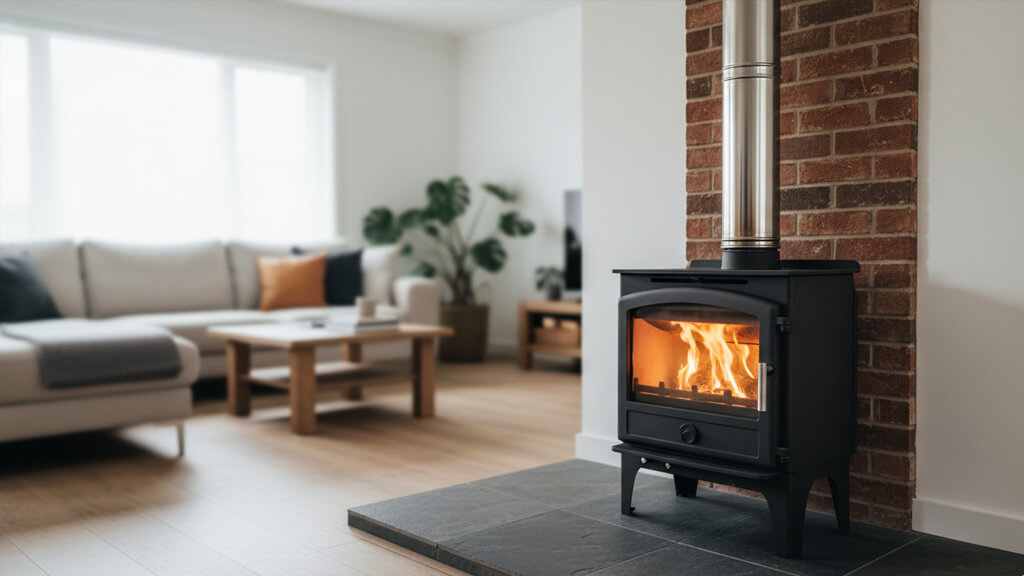
Modern EPA-certified wood stoves are designed to burn cleaner, hotter, and longer. They’re built to extract real heat from every log, not waste it. In practical terms, that means fewer refuels, less smoke, and noticeably better heating performance across your space.
For homeowners dealing with rising oil, gas, or electric costs, that difference shows up quickly—not just in comfort, but in long-term savings.
Still, before any of that matters, the numbers have to make sense.
What Does a Wood Burning Stove Installation Cost in 2026?
The honest answer is still the same: it depends on your home.
But based on typical projects across Connecticut, most homeowners fall into a clear range.
A standard wood stove installation usually lands somewhere between $2,500 and $5,500.
If the setup is more complex—like installing a brand-new chimney system or customizing the layout—that number can move closer to $7,000 to $10,000.
That gap isn’t random. It comes down to a few key factors that shape almost every installation.
Where the Cost Actually Comes From
When people search “how much to install a wood stove”, they’re usually thinking about the unit itself. But the stove is only part of the full picture.
The Stove Itself
Most wood stoves fall between $1,000 and $3,500.
The price depends on size, build quality, and heating capacity. A small unit designed for one room costs less than a larger stove meant to heat an entire floor.
Materials also matter. Cast iron holds heat longer. Steel heats up faster. Both do the job—it just depends on how you plan to use it.
Installation Labor
This isn’t a DIY-friendly project.
Proper installation involves more than placing the stove and connecting a pipe. It requires safe clearances, correct venting angles, proper sealing, and a system that drafts efficiently without pushing smoke back into the home.
Labor typically ranges from $600 to $2,500, depending on complexity.
Chimney and Venting Work
This is where costs can shift the most.
If your home already has a masonry chimney, it may still need a stainless steel liner to safely handle the stove’s output. Older chimneys are rarely sized or sealed correctly for modern units.
If there’s no existing chimney, a full venting system has to be installed—usually running vertically through the home and roof, or out through an exterior wall.
That part alone can add $1,500 to $3,000 to the project.
In many Connecticut homes we inspect, older chimneys often require a stainless steel liner before they can safely handle a modern wood stove, especially since most weren’t originally built for today’s higher-efficiency systems
Hearth Protection and Clearances
Wood stoves generate serious heat. Floors and nearby walls need proper protection.
That usually means installing a non-combustible hearth pad or upgrading the existing base. Costs vary, but most setups fall between $200 and $800, depending on materials and finish.
Stove vs. Insert: A Decision That Affects Your Budget
One of the biggest cost differences comes down to what you’re installing into.
If your home already has a fireplace, a wood stove insert can be a practical upgrade.
Open fireplaces are notoriously inefficient. They look great, but they tend to pull warm air out of the house rather than heating it effectively.
An insert solves that.
It fits directly into the existing firebox and uses a sealed system to push heat into the room instead of losing it through the chimney.
Because the structure is already there, installation is often simpler, and the overall cost stays lower than building something new.
On the other hand, installing a freestanding stove from scratch—especially without an existing chimney—requires more materials, more labor, and a higher overall investment.
Connecticut Regulations You Can’t Ignore (2026)
This isn’t a plug-and-play upgrade.
Connecticut has clear rules around wood stove installations, and for good reason.
Every new unit must be EPA-certified, meeting strict emissions standards. These regulations aren’t just about compliance—they directly affect how efficiently your stove burns and how much smoke it produces.
Installations also follow NFPA 211 safety guidelines, which define exact clearances between the stove, walls, and nearby materials. These measurements aren’t flexible. They’re there to prevent heat damage and fire risk over time.
Then there’s permitting.
Most towns require permits before installation begins, followed by a final inspection once the work is complete. Skipping this step isn’t worth the risk—it can create problems with insurance, resale, and safety verification later on.
There’s also a practical expectation from CT DEEP: burn seasoned wood.
Wet or unseasoned wood doesn’t just reduce efficiency—it creates excess smoke and leads to creosote buildup inside the chimney, which becomes a long-term fire hazard.
Questions Homeowners Usually Ask
After years of working on these systems, the same questions come up again and again.
Some homeowners want to know if buying their own stove reduces the cost. It can help upfront, but installation, venting, and safety requirements remain the same.
Others ask about basement installations. These can work well for whole-home heating, but running a chimney through multiple levels naturally increases cost.
And then there’s the question of building a full fireplace from scratch.
That’s usually the most expensive route—often starting around $8,000 and climbing quickly, depending on design and structure.
What Actually Matters Before You Install One
Cost matters. But it’s not the only factor that determines whether this is a good decision.
What matters more is how the system is designed for your home.
A properly installed stove should draft cleanly, heat consistently, and operate without constant adjustment. It should feel stable, predictable, and safe—especially during peak winter use.
Poor installations don’t fail immediately. They create problems slowly—smoke issues, inefficient burning, or buildup inside the chimney that becomes dangerous over time.
That’s why the installation itself matters just as much as the unit you choose.
A Final Thought Before You Make the Call
A wood burning stove isn’t just another home upgrade. It changes how your home feels in winter.
There’s a different kind of comfort that comes with steady, radiant heat. It’s quieter. More consistent. Less dependent on external systems.
But it only works the way it should when everything behind it—the venting, the clearances, the setup—is done right.
If you’re seriously considering it, the next step isn’t guessing numbers online. It’s having someone look at your space, your layout, and your existing structure to see what actually makes sense.
That’s where the real answers start to become clear.
Built on 12+ Years of Experience—Backed by Certified Standards, Not Guesswork
At GMT Home Services, our work is backed not just by experience, but by recognized industry standards.
With over 12 years serving Connecticut homeowners, we follow all state building codes, EPA-certified installation requirements, and NFPA 211 safety guidelines on every project.
We also align our work with CSIA (Chimney Safety Institute of America) best practices, which are widely considered the benchmark for chimney and venting safety across the industry.
That means every stove installation is approached with proper drafting, correct clearances, and a system designed to perform safely over time—not just pass inspection.
It’s a level of consistency that comes from years in the field and a commitment to doing the job the right way, every time.