Dry Chimneys. Safe Homes. Lasting Protection.
For over 14 years, GMT Home Services has proudly served 3,000+ homes across Connecticut, Massachusetts, and Rhode Island, keeping families safe through professional chimney waterproofing services. Our team is CSIA-certified (Chimney Safety Institute of America) and trained in NFPA standards, ensuring every job is completed with unmatched safety and precision.
Why Chimney Waterproofing Matters
Your masonry chimney is strong against heat but vulnerable to the elements. Rain, snow, and freeze-thaw cycles can slowly wreak havoc on brick chimneys, chimney crowns, mortar joints, and the roof line. Left untreated, water intrusion leads to:
- Small cracks that expand when temperatures drop
- Spalling brick surfaces and eroded mortar
- Structural damage from trapped moisture and freeze-thaw cycles
- Mold growth, health problems, and costly repairs
The damaging effects of water can compromise the structural integrity of your entire chimney. The Chimney Safety Institute of America recommends applying a chimney water repellent or chimney sealant to prevent these risks and create a watertight seal.

How We Waterproof Chimneys
We use ChimneySaver, a waterproofing product developed specifically for masonry chimneys, and we verify the product label for ASTM E-514-style water-penetration testing, breathability claims, and proven resistance to moisture. Backed by ASTM tests conducted on durability and effectiveness, ChimneySaver provides long-lasting protection against water penetration while allowing the chimney to “breathe.”
Here’s how our process works:
- Inspection & Cleaning – We remove dirt, moss, and debris from the brick surface using safe methods, and inspect the chimney for structural issues before any sealant is applied.
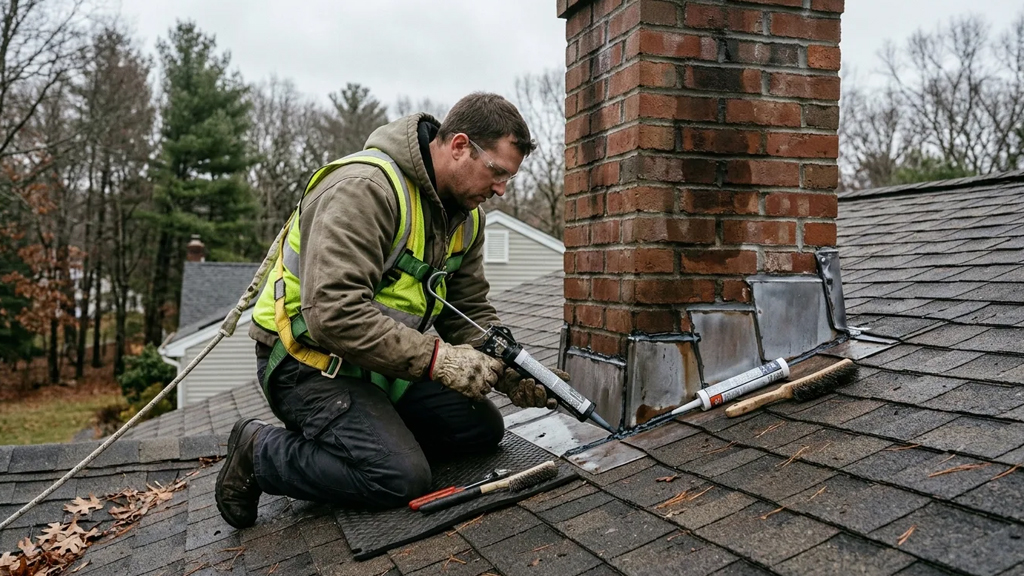
- Sealing Cracks – Repairing mortar joints, chimney crowns, and small cracks prevents further damage. Tuckpointing is completed on deteriorated mortar joints first, and crumbling areas, a cracked crown, or a missing cap are repaired rather than sealed over.
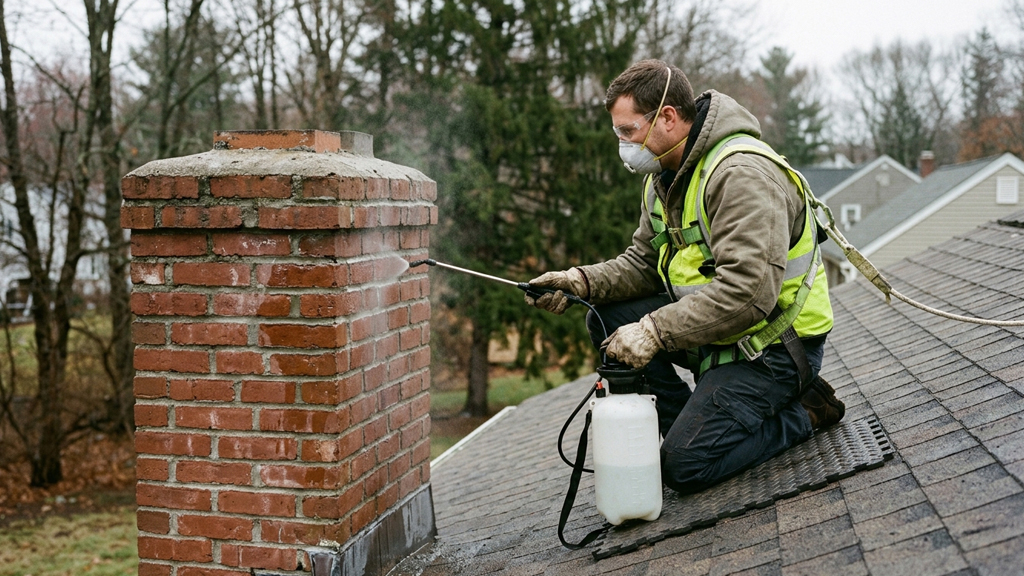
- Application of Water Repellent – Using a garden sprayer, we apply a silane siloxane water repellent for brick that is vapor-permeable. It is typically applied with a sprayer or brush in dry weather at the right temperature—above 40°F—for maximum effectiveness.
- Second Coat (if needed) – On highly porous bricks or stone, a second coat ensures deeper penetration.
- Final Safety Check – We confirm the protective layer is evenly applied across the entire chimney, including the roof line and vulnerable flashing areas. Flashing repair is also addressed where the chimney meets the roof, since water follows the path of least resistance.
This process prevents water damage, extends chimney life, and gives you confidence that your chimney is safe for the winter months. Stop your chimney leak and waterproof your chimney with expert help from GMT Home Services.

Seeing Cracks in Your Brick Chimney or Mortar Joints?
Small cracks in mortar joints or a worn chimney crown may not look serious—but rain seeping through small cracks or gaps in mortar joints and a worn crown can lead to bigger damage as freeze-thaw cycles wreak havoc on your masonry chimney. Don’t wait until costly damage appears.
Why Chimney Caps Aren’t Enough
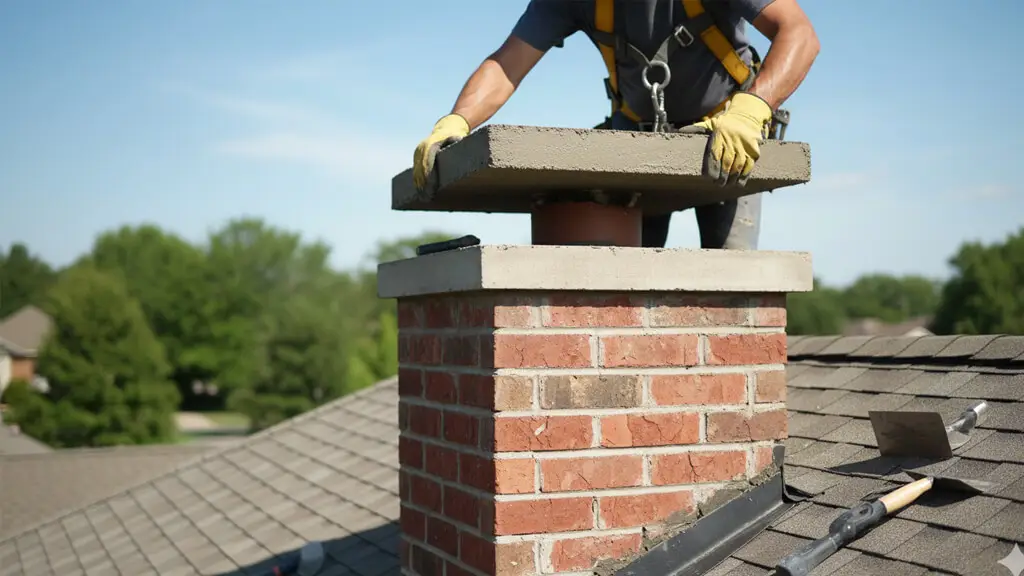
Installing a chimney cap helps block rain and debris and keeps the flue drier from direct rainfall—but it can’t stop water from soaking into masonry chimneys. To fully prevent water damage, your chimney also needs:
- A sealed chimney crown
- Professional chimney sealer
- A vapor-permeable waterproofing product designed for masonry
These solutions reduce water penetration, protect against freeze-thaw cycles, and stop safety hazards caused by trapped moisture.

Protecting Brick Chimneys from Water Damage with Chimney Sealer
Brick chimneys are especially vulnerable because bricks and mortar joints absorb moisture. Without protection, water vapors expand during freeze-thaw cycles, leading to spalling, cracks, and costly damage.
With ChimneySaver water repellents, ASTM tests show that nearly every chimney can be protected—up to 99.9% reduction in water penetration—while still allowing moisture and trapped water vapors to escape. For brick chimneys, penetrating silane/siloxane repellents are recommended because they repel rain while letting water vapor escape. By contrast, a paint-like coating such as film forming coatings or an acrylic coating on fired brick can trap moisture.

Water Leaks Around the Fireplace? Consider Flashing Repair
If you notice stains near your roof line, damp odors, damp spots, rust stains near the fireplace, or leaks in your fireplace, water penetration is already reducing your chimney’s structural integrity. Without a waterproof chimney sealant, trapped moisture can lead to mold and health problems.
How Much Does Chimney Waterproofing Cost?
The cost of chimney waterproofing depends on the scope in the estimate, so the task and price should be clearly discussed together before work begins:
- The size and height of your chimney
- Materials used (brick, stone, or concrete)
- The amount of cracks or mortar damage
- Whether a solvent-based or water-based product is needed
On average, one gallon of repellent covers about 100 square feet. While DIY products exist, only a professional chimney waterproofer can ensure a true watertight seal that lasts for years. Professional service can prevent costly repairs by including the right prep work for the chimney’s actual condition and size.

DIY vs. Professional Waterproofing
It may be tempting to buy a chimney sealer and try a quick DIY fix, but there are serious risks:
- Safety Hazards – Working at heights near the roof without proper gear is dangerous.
- Ineffective Application – Homeowners often miss cracks along the roof line, chimney crowns, or mortar joints.
- Short-Term Results – Many store-bought sealants and other chimney waterproofing products aren’t vapor-permeable and can trap moisture inside; some DIY options are less durable and may not offer the same resistance to water penetration or flexibility through temperature changes as professional-grade materials.
Our certified team applies water repellents tested to withstand freeze-thaw cycles, giving you professional results with warranties for long-lasting protection.

Worried About Winter Damage?”
When temperatures drop, water trapped in bricks expands—causing cracks, leaks, and dangerous safety hazards. A proper chimney water repellent provides long lasting protection against freeze-thaw cycles and prevents water damage year-round.
Maintaining a Waterproof Chimney
Once your chimney is protected, it’s important to maintain it:
- Schedule annual inspections with a CSIA-certified chimney sweep
- Reapply waterproofing typically about every 5 years, though timing depends on climate and the condition of the chimney materials
- Keep your chimney cap and chimney crown clear of debris
- Address cracks in mortar joints and bricks early
As part of ongoing chimney maintenance, regular care helps prevent leaks, costly repairs, and safety hazards—keeping your fireplace, roof, and home safe during harsh winter months.

Why Homeowners Trust GMT Home Services
With 12+ years of experience, CSIA and NFPA credentials, and more than 3,000 homes served, GMT Home Services is one of the best chimney waterproofing companies in Connecticut. Our reputation is built on:
- CSIA-certified & NFPA-trained technicians
- Use of industry-leading ChimneySaver waterproofing products
- Detailed estimates with no hidden fees
- Expertise in brick chimneys, masonry, and chimney crowns
- A strong track record of safety, efficiency, and reliability

Protect Your Chimney Today
Don’t wait until moisture, rain, and freeze-thaw cycles cause costly damage to your chimney and home. Get ahead of the problem with a watertight seal and expert care.With our certified expertise and long-lasting protection, your chimney will stay safe, strong, and ready for every season.
FAQs
1. Why is chimney waterproofing important?
Chimney waterproofing prevents water penetration that can damage brick chimneys, mortar joints, and chimney crowns. Without a protective layer, freeze-thaw cycles cause cracks, leading to costly repairs and safety hazards.
2. How does water damage affect a masonry chimney?
Water intrusion can weaken mortar, bricks, and the chimney crown. Over time, trapped moisture expands when temperatures drop, reducing structural integrity and causing further damage to the entire chimney.
3. What’s the difference between a chimney cap and waterproofing?
A chimney cap keeps out direct rain and debris at the roof line, while a waterproofing product—such as a vapor permeable chimney sealer—creates a watertight seal across the brick surface and mortar joints to reduce water penetration.
4. Can all brick chimneys benefit from waterproofing?
Yes. Nearly every chimney, whether brick, stone, or masonry, can benefit from chimney water repellent treatment. It protects against leaks, prevents water damage, and extends the life of materials like concrete and mortar.
5. What type of waterproofing product should be used?
Choose a chimney water repellent product developed specifically for masonry chimneys and tested to ASTM standards. For brick chimneys, a vapor-permeable silane siloxane water repellent is preferred over a waterproof coating that can trap moisture in the masonry. Elastomeric coatings are better suited to concrete crowns, where they can bridge hairline cracks, than to fired-brick chimney walls. Apply the sealant during dry weather when temperatures are between 50–80°F.
6. How long does chimney waterproofing last?
With proper application of a chimney sealant—often applied with a garden sprayer in one gallon coats plus a second coat for maximum protection—long lasting protection can extend for 10+ years before reapplication is needed.
7. Can waterproofing help prevent health problems?
Yes. By preventing leaks and trapped moisture, waterproofing reduces the risk of mold growth inside the home, protecting indoor air quality and minimizing potential health problems.
8. How much does chimney waterproofing cost?
The cost varies based on the size of the job, type of brick chimney, and extent of existing cracks or water damage. Many certified chimney professionals offer estimates and detailed inspections before sealing the chimney.