Proper chimney and flue functioning is essential for safe and efficient heating appliance operation. Whether your Connecticut home has a century-old brick fireplace or a recently installed wood stove, the chimney system that vents combustion products outdoors protects your family from fire and toxic gases every time the heat runs.
This guide covers how chimneys and flues work, what types exist in Hartford-area homes, what goes wrong, and when to call for professional services.
Chimneys vs. Flues: What’s the Difference and Why It Matters
A chimney is the full vertical structure, built from brick, stone, concrete blocks, or factory-built metal, that encloses the venting pathway. The flue is the channel running inside the chimney structure for gas and smoke. A chimney contains one or more flues, and those flues guide smoke and gases out of the building. Chimneys are more complex than just containing flues; they include fireboxes, dampers, smoke chambers, crowns, flashing, and structural masonry or metal framing.
One chimney stack can hold multiple flues serving different appliances. A colonial-era Hartford home, for example, might have a single chimney with separate flues for a living room fireplace, a basement boiler, and a second-floor wood stove. Each flue must be independently sized, lined, and maintained. A chimney safely exhausts toxic combustion byproducts away from living spaces, but only when every component works together.
Using correct chimney terminology matters when booking inspection, cleaning, or flue lining work. Telling a technician “my chimney smokes” is less useful than “the flue serving my second-floor fireplace has a downdraft.” Precision speeds diagnosis and keeps costs down.
Here is a simplified vertical map of a typical masonry chimney, from bottom to top:
- Firebox: the brick or stone chamber where fuel burns
- Hearth: the fireproof floor extending into the room
- Chimney breast: the wall projection enclosing the chimney inside the house
- Damper / throat: an adjustable plate above the firebox controlling airflow
- Smoke chamber: the transitional space narrowing from firebox width to flue width
- Flue liner: the inner tube (clay, metal, or concrete) protecting the chimney structure
- Chimney stack: the visible masonry or metal section above the roof line
- Chimney cap / pot: the top cover keeping rain, animals, and debris out
All fuel-burning appliances, whether burning wood, gas, or oil, must vent through a safe, correctly sized flue. An undersized or damaged flue can push smoke and carbon monoxide into living areas rather than carrying them outdoors.
How a Chimney System Works (Natural Draft Explained Simply)
The stack effect is the engine behind every natural draft chimney. Hot flue gases are less dense than the cold air outside. That density difference creates upward pressure inside the chimney flue, drawing air into the firebox and pushing exhaust gases upward and out. The taller the chimney and the hotter the flue gases relative to outdoor temperature, the stronger the draft. ASHRAE’s draft equations confirm that chimney height multiplied by the temperature difference between flue gas and ambient air governs the upward movement of combustion products.
The flue directs toxic gases and smoke outdoors and facilitates combustion air movement. Open fires, wood burning stoves, and gas appliances all rely on this natural draft or, in some cases, mechanical draft fans to move combustion byproducts safely outside.
Three variables control draft performance:
flue height, cross sectional area, and gas temperature.
Improper flue sizing can lead to poor draft performance, causing smoke spillage or down-draught. Under Connecticut’s adopted building code, Chapter 18, a solid fuel appliance flue area must be at least the area of the appliance collar and no more than three times that area. Flue size must match the appliance it vents; a smaller flue chokes flow, while an oversized one cools gases too fast, promoting condensation and reducing rise. Proper sizing of flues prevents gas condensation and incomplete combustion exhaust.
Modern, tightly sealed Connecticut homes present a particular challenge. When bath fans, kitchen hoods, and weatherization reduce indoor air pressure, the chimney may not get enough warm air feeding the fire. The result: smoke backs into the room instead of rising. Direct-vent systems solve this by drawing combustion air from outside and venting exhaust through a coaxial pipe, bypassing indoor pressure entirely.
GMT Home Services checks draft performance and air supply during Level 1 and Level 2 chimney inspections, and their professional chimney inspection services help Hartford-area homeowners document hazards and keep systems code-compliant.
Types of Chimney Flues and Liners in Connecticut Homes
Chimney flues can be made of clay, concrete, or metal. Each material has specific maintenance needs, lifespan characteristics, and compatibility requirements with different heating appliances. Before installing a new wood burning stove, insert, or high-efficiency gas appliance, identify your existing chimney flue type.
Many Hartford-area homes built before the 1960s have unlined or clay tile flues. Homes from the 1970s and 1980s more often have pre cast flue blocks or factory-built metal flues. Post-2000 construction frequently uses insulated stainless steel systems or prefabricated chimney stacks.
GMT Home Services can confirm flue type during inspection and recommend appropriate upgrades or flue liners, including chimney liner repair services when existing liners are damaged or deteriorated. The table below summarizes how different flues compare.
| Flue Type | Common Era | Pros | Cons |
| Clay tiles | Pre-1900s through 1980s | Low cost, fire-resistant | Brittle; cracks from heating and cooling cycles; mortar joints fail |
| Concrete / pre-cast | 1960s onward | Better insulation than bare brick; consistent geometry | Can crack from heat stress or freeze-thaw; heavy |
| Stainless steel (rigid/flex) | 1980s onward | Corrosion-resistant; correct sizing easy; seamless liner option | Higher upfront cost; requires proper insulation wrap |
| Factory-built / twin wall | 1990s onward | Engineered, UL-listed; installs without masonry | Fixed lifespan per manufacturer; limited repair options |
Clay, Concrete, and Pre-Cast Flues
Clay tile liners are traditional and budget-friendly for standard masonry setups. They dominated Connecticut masonry chimneys from the early 1900s through about the 1980s. Masonry chimneys are typically built from brick, stone, or concrete blocks, and clay tile flues are common in older masonry chimneys. The tiles are stacked inside the chimney with lime mortar or refractory cement at each joint.
The problem: clay tile flues may crack over time due to heating cycles. A wood fire can push flue temperatures above 1,000°F, then the flue cools to ambient overnight. Repeated expansion and contraction splits tiles vertically. Failed mortar joints between tiles create gaps where heat and sparks can reach wood framing.
Concrete liners and pumice or concrete sectional flues appear in some newer masonry stacks. Concrete flues are typically used in newer construction homes. Pre cast flue systems integrated into walls offer better insulation than bare brick, but they still crack from high heat stress, freeze-thaw weathering, or building settlement.
Defects like missing mortar joints, gaps, and spalling tiles increase chimney fire and carbon monoxide leakage risk. A single vertical crack spanning two or three tiles can let 1,800°F gases reach combustible framing just inches away.
Video scan inspections allow GMT Home Services to document internal damage and determine whether repair, a cast-in-place lining, or a new flue liner is the safest option.
Stainless Steel and Other Metal Flues
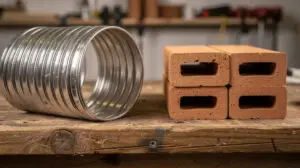
Stainless steel chimney liners are now the most common upgrade solution for older masonry chimneys. Metal flues are often made from stainless or galvanized steel, though stainless steel dominates because it resists the corrosive byproducts of wood and gas combustion and can be restored through chimney flue repair services when damage or corrosion is discovered.
Two main forms exist. Rigid stainless steel chimney liners, welded in sections, are often used for wood stoves and fireplace inserts where straight runs allow it. Flexible stainless steel liners are dropped through existing flues in retrofit situations, bending around offsets and irregularities inside the existing chimney. This flexibility makes them the standard choice when relining an old masonry stack for a chimney flue installation.
For homes without a traditional chimney at all, prefabricated metal chimneys are engineered systems made of insulated pipes. Twin wall flues allow fireplaces to be installed without traditional chimneys; they run through interior spaces or along exterior walls and terminate above the roof line.
Material grade matters. 316-grade stainless steel handles both wood burning and gas appliances well. Heavier creosote conditions or coal service may call for higher alloy grades. The correct sizing of a new flue improves natural draft, reduces creosote buildup, and brings older chimneys into compliance with current building regulations.
Stainless steel liners improve fireplace efficiency and safety by maintaining higher flue gas temperatures, which keeps the draft strong and combustion byproducts moving upward rather than condensing on liner walls.
Why Flue Liners and Chimney Liners Are Essential for Safety
Flue liners and chimney liners are protective inner sleeves that contain heat, sparks, and corrosive gases inside the chimney flue. Without them, or with a deteriorated lining, the chimney structure itself absorbs heat and transmits it to surrounding wood framing.
Unlined or deteriorated masonry flues allow high temperatures and embers to reach adjacent combustibles. This is a leading cause of hidden chimney fires that burn inside wall cavities before anyone notices smoke. A chimney provides structural safety and protects against combustion hazards only when the flue lining is intact.
The National Fire Protection Association’s NFPA 211 requires lined chimneys for solid fuel appliances. Flues must be lined to prevent gas leaks and fires. Many older Connecticut homes predate these standards; their existing flues may have no liner at all, or clay tiles that cracked decades ago.
Liners also protect masonry from acid attack. Modern high-efficiency furnaces and boilers produce cooler exhaust gases that condense inside oversized flues, forming sulfuric or hydrochloric acid that eats through mortar and brick. Chimney flues must meet local building codes, and Connecticut’s code interpretation I-22-03 requires that unlined interior chimneys be lined or rebuilt before connecting new appliances.
GMT Home Services routinely installs stainless steel liners as part of chimney repair, gas appliance conversions, and wood stove upgrades across Hartford County, and their chimney flue cleaning in Connecticut helps keep those systems operating safely and efficiently.
Chimney Fires, Creosote Buildup, and Wood Burning Practices
Creosote buildup is an unavoidable byproduct of burning wood. It forms when volatile organic compounds in smoke cool and condense on flue walls. Creosote buildup is a common cause of chimney fires; it is also the primary fuel that ignites in most of them. In a recent reporting year, Connecticut fire departments recorded 104 chimney fires among 1,671 total residential fires, accounting for roughly 6.2% of all residential fires statewide.
Creosote develops in three stages:
- Stage 1: light, fluffy soot; removed easily with a brush
- Stage 2: darker, crunchy flakes; harder to clean but still manageable
- Stage 3: hard, glazed tar coating; highly flammable and ignites at lower temperatures than Stages 1 or 2
Improper wood burning practices accelerate buildup. Smoldering fires, unseasoned wood with moisture content above 20%, and restricted air supply all produce cooler smoke that condenses faster. A restricted or oversized chimney flue also cools smoke too quickly, promoting heavy deposits on liner walls. Burning only seasoned wood and keeping dampers and air controls properly adjusted reduces accumulation.
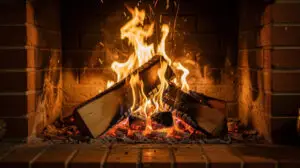
The National Fire Protection Association recommends yearly chimney sweeps, and professional chimney cleaning is recommended at least once a year for any wood burning system in regular use. High-use wood stoves or inserts may need cleaning every few months, and scheduling a professional chimney sweep in Connecticut is the most reliable way to control heavy creosote buildup. Creosote buildup can lead to chimney fires that damage flue liners, crack masonry, and spread fire into the home’s structure.
Carbon Monoxide Risks and Draft Problems
Carbon monoxide is colorless, odorless, and produced by incomplete combustion in fireplaces, boilers, and gas appliances. A properly functioning flue vents carbon monoxide outside the home. When the chimney flue is blocked, undersized, or damaged, those gases have nowhere to go but back into living areas.
Flue blockages can cause carbon monoxide buildup. Common causes include bird nests, collapsed clay tiles, heavy creosote deposits, and disconnected connectors. Gas fires and oil burners are not exempt; they produce carbon monoxide at lower rates than open fires, but the risk compounds in tight homes with poor proper airflow.
Warning signs of poor draft and potential carbon monoxide exposure:
- Frequent smoke spillage around the fireplace opening
- Lingering combustion odors when the fire or furnace runs
- Soot or staining on walls near the chimney breast
- Headaches, dizziness, or nausea only when heating appliances operate
Carbon monoxide alarms should be installed and tested regularly for safety. Connecticut homes using any fuel burning appliance should have UL-listed detectors on every level, particularly near bedrooms. GMT Home Services technicians check for visible venting issues and recommend further evaluation if carbon monoxide concerns surface during inspection, often folding those checks into their broader chimney maintenance services in Connecticut.
Common Chimney and Flue Defects We See in Connecticut
New England weather cycles between sub-zero winters and humid summers, subjecting chimney structures to intense heating, cooling, wind, and moisture. The damage follows predictable patterns.
External defects:
- Cracked or missing mortar joints requiring repointing
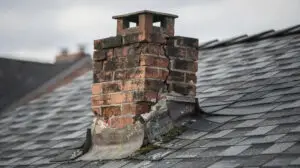
- Spalled bricks (surface flaking from freeze-thaw)
- Leaning chimney stacks from foundation settlement
- Deteriorated chimney crowns that let water pool on top
- Failed flashing where the roof meets the chimney, causing leaks into attic and ceiling spaces
Internal flue defects:
- Missing or cracked clay tiles with vertical fractures spanning multiple sections
- Failed parging (the smooth inner coating) exposing bare brick
- Rusted metal flues and corroded damper assemblies
- Improper or deteriorated flue lining that no longer contains heat
These problems cause water intrusion, structural instability, loss of natural draft efficiency, and increased fire risk. Routine inspections, such as GMT’s chimney services in Hartford, CT, are necessary to catch issues like cracked tiles or creosote buildup before they become emergencies.
GMT Home Services provides written inspection reports with photos and repair options so homeowners can prioritize safety-critical work. For visible external damage, our team also evaluates chimney restoration options.
Moisture, Damp, and Pre-Cast or Unused Flues
Rain ingress and condensation inside chimney flues create damp problems, salt staining on interior plaster, and accelerated masonry decay. A missing or cracked chimney cap lets rainwater run directly down the flue, soaking into mortar joints and pooling at the smoke shelf.
Sealed or unused flues compound the problem. A redundant fireplace closed off in the 1990s or 2000s often traps moisture with no ventilation path, leading to musty odors and tarry stains on interior walls adjacent to the chimney breast. Without air circulation, condensation never dries.
Modern gas appliances and high-efficiency oil boilers produce cooler exhaust gases than older equipment. In an oversized masonry flue, those gases cool below their dew point, and the resulting condensation deposits corrosive byproducts on unlined or poorly insulated flue walls. This acid attack dissolves lime mortar and weakens brick over a few heating seasons.
Solutions include installing an appropriate chimney cap, repairing crowns and flashing, relining with an insulated stainless steel seamless liner, and adding top-and-bottom ventilation to redundant existing flues. GMT Home Services evaluates both the roof line and interior conditions when tracing the source of chimney-related damp in Hartford-area properties, and can coordinate any needed Canton, CT chimney repair when structural or flue damage is involved.
Choosing, Maintaining, and Upgrading Your Chimney System
Chimney safety is an ongoing process: correct installation, regular inspection, chimney cleaning, and timely repairs. Chimneys should be inspected at least once per year; scheduling a Canton, CT chimney inspection is one way local homeowners can stay ahead of wear and hidden defects. Annual inspections help identify potential chimney flue issues early, before a cracked tile or failing connector becomes a fire or carbon monoxide hazard. Annual inspections by certified professionals are recommended for any system venting solid fuel, gas, or oil, consistent with NFPA guidance.
Upgrading to new flue liners or a stainless steel chimney system makes sense in several situations:
- Changing appliance or fuel type (oil to gas, fireplace to wood stove)
- Persistent draft issues that proper cleaning does not resolve
- Discovered flue damage during video inspection
- After a chimney fire that may have cracked existing liners
For day-to-day safety: burn only seasoned wood, keep the flue clean by scheduling professional services before each heating season, and never ignore smoke backing into rooms. A well-maintained chimney with correct sizing, intact flue lining, and a functioning chimney cap will perform for decades.
When to Call GMT Home Services for Chimney and Flue Help
Schedule a professional visit when any of these trigger events occur:
- Buying a home with an unknown chimney history
- Converting to a wood burning stove or adding a gas insert
- Noticing staining, odors, or smoke issues around a fireplace or heating appliance
- After severe storms or visible chimney damage above the roof
- If your existing chimney has not been inspected in more than 12 months
During a visit, homeowners can expect a visual roof line check of the chimney stack, crown, and flashing; a fireplace and appliance assessment at the firebox level; an internal flue inspection (video camera when warranted); and a plain-language explanation of findings with a written report.
Schedule inspections before late fall in Connecticut. September and early October leave time to complete any needed chimney repair, flue lining, or flue replacement before peak heating season arrives.
GMT Home Services is a family-owned chimney specialist serving Hartford and surrounding Connecticut towns. Our chimney experts in Connecticut handle inspection, cleaning, repair, restoration, new chimney construction, and combined chimney-and-roofing evaluations. Contact our team to book a chimney inspection, request a quote for stainless steel liner installation, or ask about bundled chimney and roofing services. Safe chimneys and flues protect your home, your heating investment, and your family.