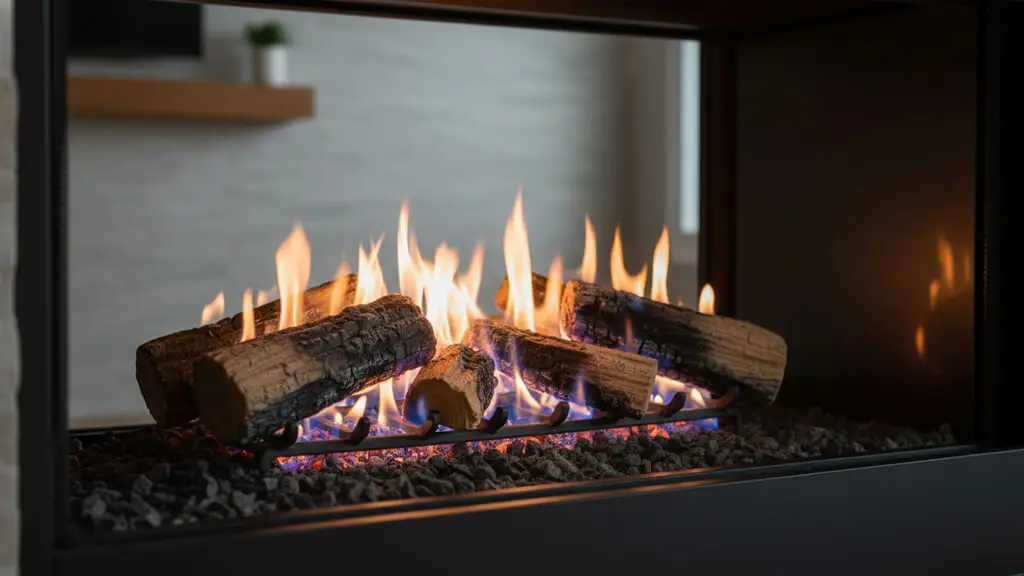
When I walk into a home in Hartford or West Hartford, I’m usually there because of a phone call about a pilot light that won’t stay lit or a set of logs that looks “dusty.” The first question is almost always: “What is the cost to replace these gas logs?”
It’s a straightforward question, but as a Certified technician with years in the field, my answer is rarely just a number. Why? Because a gas fireplace isn’t just a decoration; it’s a fuel-burning appliance connected to your home’s infrastructure. When we talk about cost, we’re really talking about a conversation between your budget and your family’s safety.
In this guide, we’re going to look at the 2026 pricing for gas log replacement, but we’re also going to talk about the things that matter most: NFPA compliance, indoor air quality, and why I often recommend the “Health Flip” from vent-free to vented systems.
Part 1: The Hard Numbers – What Does Replacement Actually Cost?
In the world of professional chimney and hearth services, “you get what you pay for” isn’t just a cliché—it’s a safety standard. Here is how the costs break down for a professional, code-compliant installation.
The Component Breakdown
- The Log Set ($400 – $1,500): This is the aesthetic part. Refractory ceramic logs, which I always recommend, sit at the higher end but radiate heat better and won’t crumble after three seasons.
- The Burner System ($300 – $800): This is the “engine.” Costs vary based on whether you want a basic match-lit system or a modern electronic ignition with a remote control.
- Professional Labor & Compliance ($400 – $900): This is where your money goes toward years of expertise. This includes gas pressure testing, checking for leaks, and ensuring the install meets NFPA 211 (National Fire Protection Association) standards.
Total Estimated Project Cost:
- Standard Replacement (Direct Swap): $1,200 – $2,100
- Full System Conversion (Non-Vented to Vented): $2,800 – $4,500
Expert Insight: If a contractor gives you a quote significantly lower than $1,000 for a full replacement including labor, ask them about their licensing and insurance. Cutting corners on gas connections is never worth the $200 savings.
Part 2: The Conversation No One Wants to Have (But Should)
When I’m standing in a customer’s living room, I often ask: “Have you ever felt a bit sluggish or gotten a dull headache after running this fire for a few hours?” Most people look surprised, but then they nod. If you have vent-free (unvented) gas logs, you are essentially using your living room as a chimney. While these units are marketed as “99% efficient,” that efficiency comes at a cost to your indoor air quality.
The “Health Flip”: Moving from Non-Vented to Vented
Over the last decade, I’ve helped hundreds of families make the “Health Flip.” This means decommissioning an unvented set and installing a Vented Gas Log system. Here is why this conversation matters more than the price tag:
- Respiratory Health: Vent-free logs release gases like, Nitrogen Dioxide and Carbon Monoxide, in trace amounts directly into your home. For children with asthma or elderly parents, this is a major irritant.
- Moisture and Mold: Burning gas creates water vapor. Unvented logs can dump gallons of water into your air over a weekend, leading to “sweating” windows and hidden mold growth behind your drywall.
- The Vented Advantage: Vented logs exhaust 100% of these byproducts out through the chimney. You get the warmth and the glow, but your indoor air stays as fresh as the day the house was built.
Part 3: Why Certification and Codes Matter (CSIA & NFPA 211)
You’ll see a lot of people offering “fireplace services,” but in Connecticut, you want someone who speaks the language of safety. At GMT Home Services, our 12+ years of experience are backed by CSIA (Chimney Safety Institute of America) certification and strict adherence to NFPA 211 and NFPA 54 codes.
What is NFPA 211?
This is the national standard for chimneys, fireplaces, and venting systems. It dictates everything from the clearance to combustible materials (like your mantel) to the size of the flue required for your burner.
- Why you care: If your gas logs aren’t installed to NFPA 211 specs, your homeowner’s insurance may deny a claim in the event of a fire. We ensure every install is “by the book” to protect your liability and your life.
The CSIA Standard
Being CSIA-certified means we’ve undergone rigorous testing on the physics of wood and gas combustion. We don’t just “hook up a hose.” We perform a Level 1 Inspection before every replacement to ensure your chimney liner isn’t cracked or leaking gases into your attic.
Part 4: Frequently Asked Questions in the Field
“Is my current gas stove compromising my family’s health?”
If it’s a vent-free model and you run it for more than 4 hours at a time, the answer is potentially. While they meet federal safety standards, “safe” doesn’t always mean “healthy.” Introducing a vented feature—like a direct-vent pipe or a chimney liner—is a massive upgrade for your home’s ecosystem.
“Can I just buy logs at a big-box store and install them myself?”
Technically, you can buy them. But NFPA codes and most local Connecticut building departments require a licensed gas fitter to perform the connection. One small leak or one incorrectly placed log can cause “sooting,” which will ruin your paint and furniture with black carbon dust within weeks.
“What matters most when choosing a service provider?”
Look for Licensing, Experience, and Accountability.
- Licensing: Do they have a valid CT gas license?
- Experience: Have they been doing this for a year?
- Accountability: Do they provide a written safety report and a guarantee that the work meets NFPA 211 standards?
Part 5: The GMT Home Services Promise
At the end of the day, my job isn’t just to install a log set. My job is to make sure that when you go to sleep on a cold winter night, you aren’t worrying about oxygen depletion or gas leaks.
We take our 12+ years of field experience and apply it to every single hearth we touch. Whether we’re helping you choose between the high-efficiency of a vent-free unit or the pristine air quality of a vented system, we provide the facts, the figures, and the safety codes you need to make an informed choice.
Your 2026 Fireplace Checklist:
- Check the age: If your logs are 10+ years old, the valves may be failing.
- Monitor the air: If you smell gas or “burnt dust,” call a pro immediately.
- Audit the vent: If your windows are foggy, your fireplace is likely the culprit.
- Verify the Pro: Always ask for CSIA credentials.
Ready to Upgrade Your Home’s Health?
Don’t settle for a “handyman” fix for a gas-burning appliance. Invest in the expertise that years of licensed service brings to the table. We’ll help you understand the cost to replace gas logs while ensuring your family’s health is never part of the compromise.
If something in your fireplace doesn’t feel right, trust that instinct. Gas appliances don’t give second chances. Get it checked the right way!