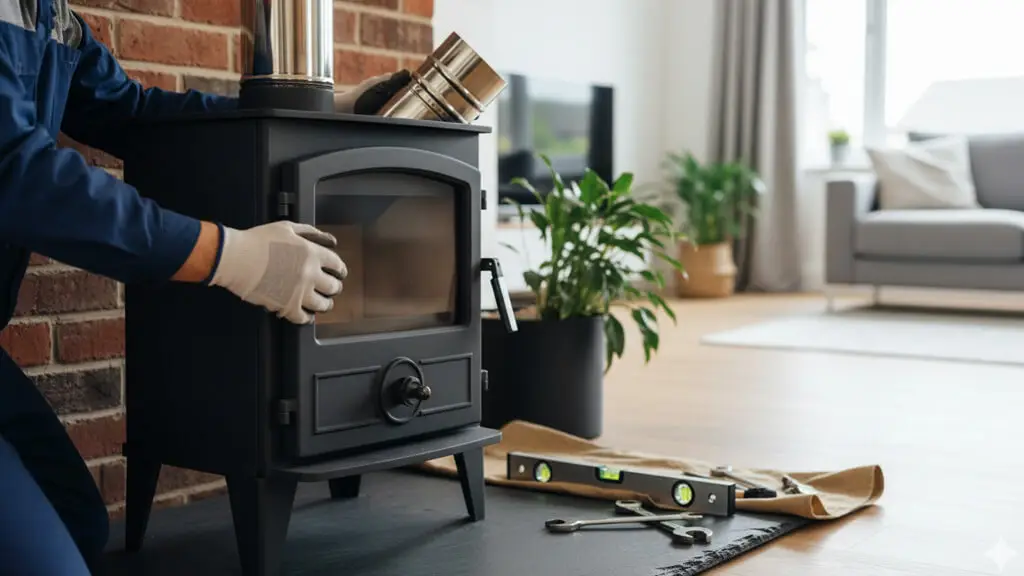
In Connecticut, when the first frost hits, my phone starts ringing. The question is always the same: “What is the log burner fitting cost for my home?” Homeowners usually have a number in mind—maybe something they saw on a DIY forum or a big-box store website. But after 12+ years in this industry, I can tell you that the cost of the stove is only half the story. The real cost lies in the fitting—the engineering that ensures your house doesn’t become a statistic in the next NFPA fire report.
At GMT Home Services, we don’t just “hook up” stoves. We provide CSIA-certified installations that meet the rigorous NFPA 211 (National Fire Protection Association) standards. Here is the 2026 breakdown of what you can expect to invest in a safe, efficient log burner.
1. The Real Numbers: How Much Do Log Burners Cost to Fit?
In 2026, a professional log burner installation in the Hartford area typically ranges from $3,000 to $8,000. If that sounds higher than the “handyman” quote you got, it’s because a legal, insured, and safe installation requires specific components that the “budget” guys often skip.
The Cost Breakdown
| Component | Estimated Cost (Installed) | Why It Matters |
|---|---|---|
| EPA-Certified Stove | $1,500 – $4,500 | Modern efficiency helps reduce wood usage and heating costs |
| Stainless Steel Liner | $1,500 – $3,500 | Ensures proper draft and reduces chimney fire risk |
| Hearth & Heat Shields | $500 – $1,200 | Protects floors and walls from high heat exposure |
| Labor & Compliance | $1,000 – $2,500 | Covers certified installation, permits, and safety testing |
2. The Conversation: “Can’t I Just Use My Existing Chimney?”
This is where my 12 years of experience usually kicks in. A homeowner will show me a beautiful 1950s masonry chimney and ask why they need a $2,000 stainless steel liner.
Here is the truth: Most older chimneys were built for open fireplaces, not modern log burners.
The Physics: A log burner produces much hotter, more concentrated exhaust. If that exhaust hits a cold, oversized clay liner, it creates creosote—the black, tar-like fuel for chimney fires.
The Solution: We “right-size” the flue with a 316-grade stainless steel liner. It ensures a perfect draft, keeps the heat inside the pipe, and meets the NFPA 211 code for solid-fuel appliances.
When you ask about the log burner fitting cost, you aren’t just paying for the pipe; you’re paying for the physics that keeps your family safe while they sleep.
3. Why Years of CSIA & NFPA Compliance Matters
You might find a general contractor who says they can “knock out” the install in an afternoon. But do they know the Clearance to Combustibles requirements for your specific model?
As a CSIA-certified pro, I live and breathe safety codes.
NFPA 211 Standards: This is the national “gold standard” for chimney safety. It dictates exactly how far your stove must be from your drywall, what kind of floor protection is required, and how the chimney must be capped.
Liability and Insurance: If a non-certified installer puts in your stove and a fire occurs, your insurance company may use the lack of NFPA compliance as a reason to deny your claim.
The “GMT” Seal: When we finish an install, you get a certificate of compliance. That’s a document that adds real value to your home when you go to sell it.
4. The “Hidden” Costs of a Log Burner
When people ask how much do log burners cost, they often forget the “day-to-day” environmental factors.
Air Quality and the “Health Flip”
Just like we discuss with gas logs, air quality is king. A poorly fitted log burner can “back-puff” smoke into your room, releasing fine particulates that irritate the lungs.
Draft Testing: Part of our fitting cost includes a Draft Pressure Test. We ensure your home’s “envelope” isn’t too tight, which can cause the stove to starve for oxygen.
Outside Air Kits: In modern, air-tight Connecticut homes, we often recommend an outside air kit. This pulls oxygen from outdoors directly into the stove, keeping your indoor air pristine.
5. Is a Log Burner Right for Your Home?
Before you commit to the log burner fitting cost, ask yourself these three questions:
- Do I have a dry place to store wood? (Unseasoned wood will ruin a $4,000 stove in one season).
- Is my chimney structurally sound? (We provide a Level 2 Video Inspection to find out).
- Am I looking for a primary heat source or a “mood setter”? (This changes the BTU output you need).
The GMT Home Services Difference
We aren’t just installers; we are consultants. We’ve spent over a decade navigating the specific building codes of Hartford, Sunnyvale, and the surrounding areas. We know which permits are needed, which stoves last 20 years, and—most importantly—how to keep the fire inside the stove.
Conclusion: Don’t Compromise on Your Family’s Safety
The log burner fitting cost is an investment in your home’s independence. It’s the ability to stay warm when the power goes out and the grid fails. But that independence is only as good as the technician who installs it.
Don’t leave your safety to chance. Trust in years of certified excellence and a team that treats your home like their own.
Frequently Asked Questions
- How much does it cost to install a log burner in Connecticut?
In most Connecticut homes, a professional log burner installation typically ranges between $3,000 and $8,000. The final cost depends on factors like chimney condition, liner requirements, and safety compliance upgrades. Homes with older chimneys often require additional work to meet modern NFPA 211 standards.
- Why is installing a log burner so expensive?
The cost isn’t just about placing a stove—it’s about ensuring safe operation under high heat conditions. A proper installation includes a stainless steel liner, floor protection, ventilation adjustments, and compliance with fire safety codes. Cutting corners here can significantly increase the risk of chimney fires or smoke issues.
- Can I install a log burner without a chimney liner?
Technically, some older setups may allow it—but it’s not recommended and often not code-compliant. Modern log burners produce concentrated exhaust that requires a correctly sized liner to prevent creosote buildup and ensure proper draft. Most professional installers will insist on a liner for safety and compliance.
- How long does it take to fit a log burner?
A standard installation usually takes one full day, but more complex jobs—such as chimney repairs or liner installations—can take 1–3 days. A proper inspection beforehand helps avoid delays and ensures everything meets safety standards.
- Do I need a permit to install a log burner in Connecticut?
Yes, in most cases, a permit is required. Local building codes typically follow NFPA 211 guidelines, and inspections may be needed after installation. Working with a certified installer ensures all permits and compliance steps are handled correctly.
- What size log burner do I need for my home?
The right size depends on your room size, insulation, and heating goals. An oversized stove can overheat the space, while an undersized one won’t provide enough warmth. This is why professionals calculate BTU requirements before recommending a unit.
- Are log burners safe for indoor air quality?
They can be—if installed correctly. A poorly fitted log burner may leak smoke or fine particles into your home. Proper draft testing and, in some cases, an outside air kit help maintain clean indoor air and efficient combustion.
- Is it cheaper to run a log burner compared to central heating?
In many cases, yes—especially if you have access to affordable or seasoned wood. Modern EPA-certified stoves are significantly more efficient and can reduce heating costs, but savings vary depending on usage and home setup.